
 Protect yourself and save money on your insurance policies!
SmartWitness is a unique way to protect yourself from crash for cash and spurious/exaggerated insurance claims.
With its discreet in-vehicle CCTV and journey recording abilities, SmartWitness provides you with admissible court evidence and protects you against false claims.
SmartWitness is inexpensive and invaluable and has been proved to save you money on your taxi insurance policies so give A1 Insurance a call today, and let us help you carry the burden.
See below for a video example of how SmartWitness can help you.
A1 Insurance Services, Driffield: 01377 318255
Example Footage
The motorcyclists involved alleged that the driver of the vehicle was on the wrong side of the road. However, you can clearly see from the footage this is not the case, and the motorcyclist lost control around the corner and slid into the front of the vehicle. With the lack of witnesses and without smart witness camera footage this would have resulted in a large claim against the driver.

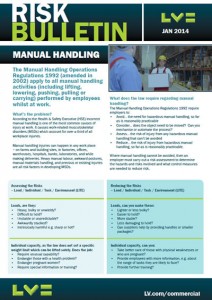 The Manual Handling Operations Regulations 1992 (amended in 2002) apply to all manual handling activities (including lifting,lowering, pushing, pulling or carrying) performed by employees whilst at work.
